
Is the detection algorithm learning?
The AI that recognises species doesn't train itself on your photos — but TrailCamHub does get smarter about each individual camera over time.
It helps to separate two things:
The recognition models stay fixed. The models that detect animals and identify species are pre-trained and don't change based on your images. Your photos aren't used to retrain them — which keeps results predictable and means your captures stay yours.
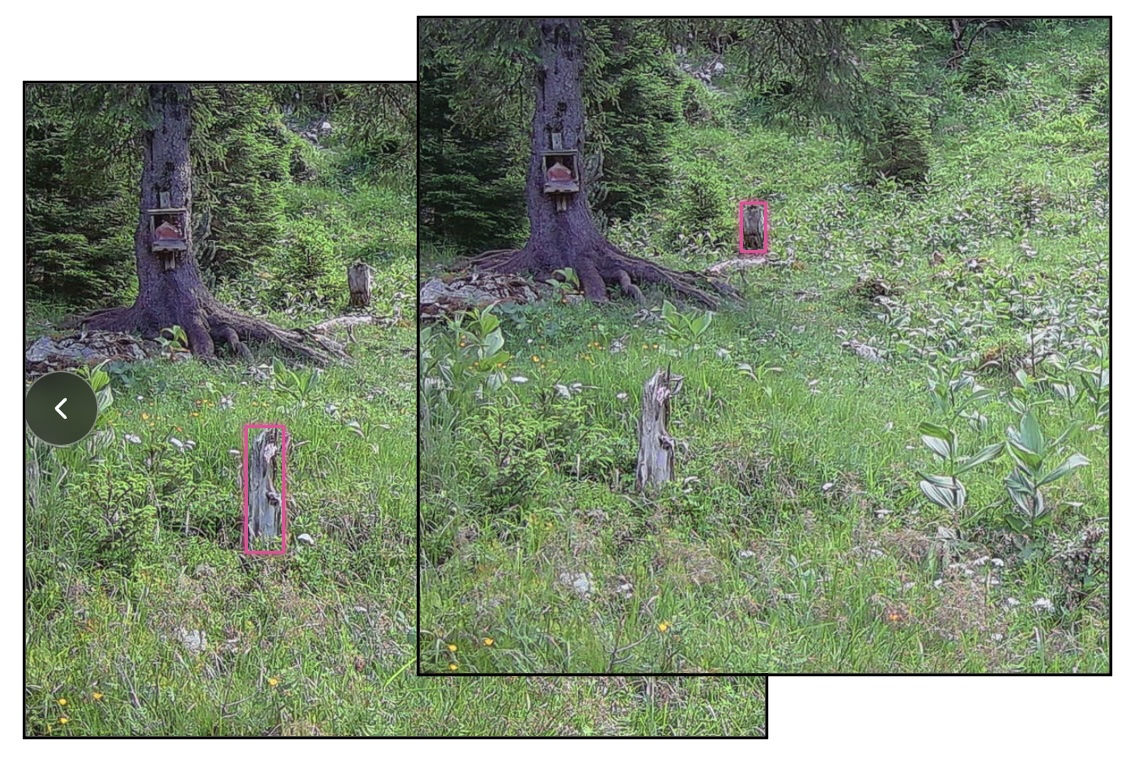
Your cameras get cleaner over time. A trail camera sits in one fixed spot, so the same tree stump, root, rock or clump of grass can trigger it again and again — and the AI sometimes mistakes a static object like that for an animal, usually with low confidence. TrailCamHub watches for exactly this pattern: when the same area of a camera's frame keeps producing a near-identical, low-confidence detection across many photos over a longer period, it concludes that spot is a false alarm and stops flagging it as wildlife. So the longer a camera runs in one position, the fewer of these phantom detections you'll see.
This kind of learning is per camera and only targets recurring false alarms. It doesn't change which species the AI can recognise, and it's designed not to hide a real animal that happens to use the same spot — animals vary in position from photo to photo and usually score higher confidence, so they aren't treated as a static object.
Using the detection API?
This false-alarm filtering is a feature of the TrailCamHub app, applied after detection on top of the raw result — it relies on each camera's photo history to spot recurring static objects. The public detection API works image by image and returns the raw detection result for the single image you send; it does not apply phantom-zone suppression. If you need that behaviour in your own integration, you'd build comparable logic on your side, or use the app, where it happens automatically.
As always, the AI is a fast first pass rather than a guarantee, and you stay in control: you can correct any result yourself.
Cet article vous a-t-il été utile ?